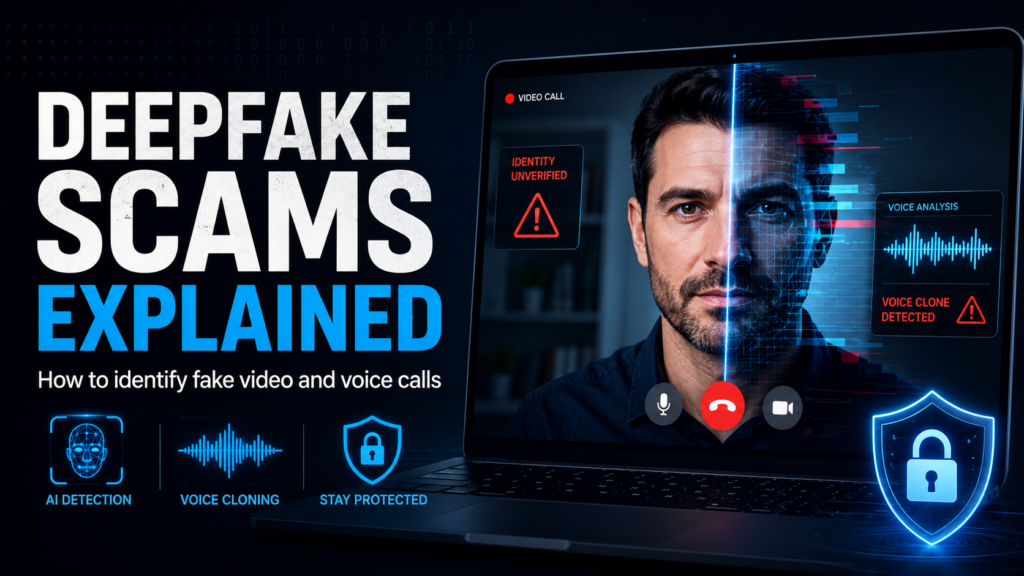
A scam call no longer needs to sound like a stranger. With AI voice cloning, it can sound like your son, your boss, or even a trusted client. The email had spelling mistakes, the caller sounded suspicious, or the message came from an unknown number asking for money.Now, the situation has changed. Here comes Deepfake scams.
Scammers are using artificial intelligence to create fake voices, fake videos, and fake identities that look and sound surprisingly real. A fake call may sound like your family member. A video may look like a company CEO. A social media ad may show a public figure promoting an investment scheme that they never actually endorsed.
This is where deepfake scams become dangerous.
A deepfake is AI-generated or AI-manipulated text messages, audio, video, or image content designed to make someone appear to say or do something they never said or did. The Federal Trade Commission has warned that scammers can use a short audio clip from online content to clone a loved one’s voice and make emergency scam calls sound more believable. (Consumer Advice)
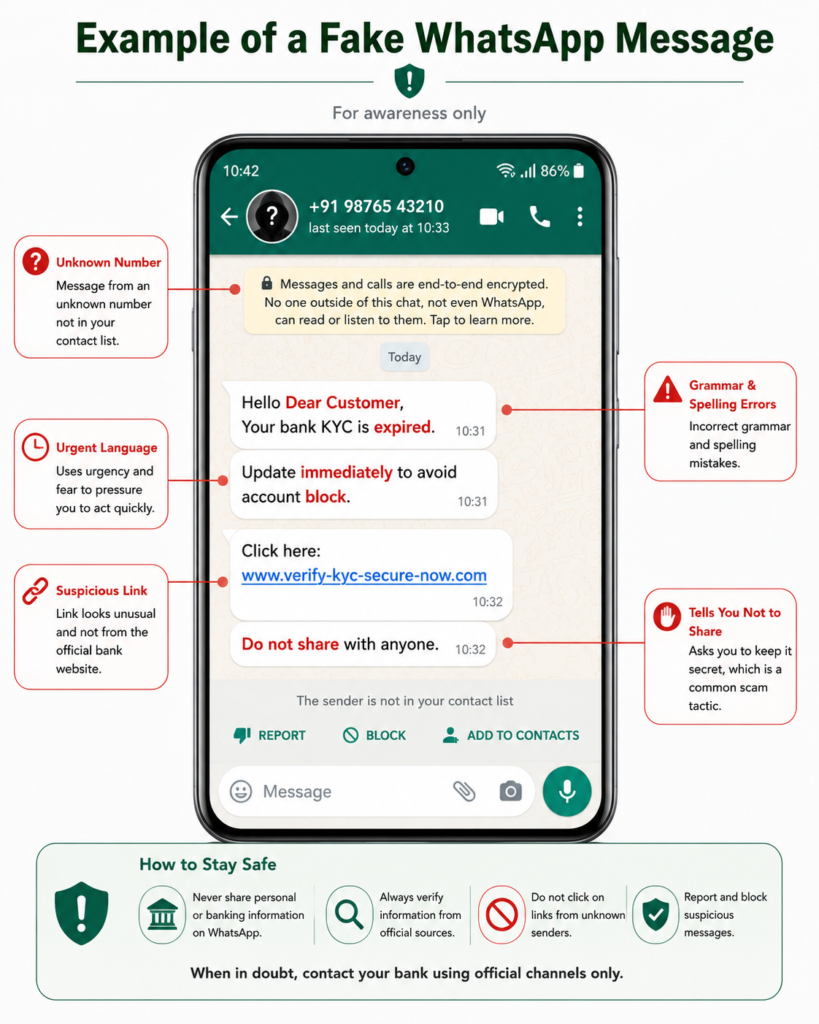
Deepfake scams are not just a future risk. They are already being used in family emergency scams, fake investment schemes, business payment fraud, romance scams, and impersonation attacks.
This article explains how deepfake scams work, how to identify fake video and voice calls, and what steps you should take before trusting any urgent digital communication.
Understanding how artificial intelligence works helps put synthetic voices and videos in context. Reducing the personal information available to impersonators is another useful step: see our guide to reducing your digital footprint.
What Is a Deepfake Scam?
A deepfake scam is a fraud attempt where criminals use AI-generated media to impersonate a real person.
This can include:
| Type of Deepfake Scams | How Scammers Use It |
| AI voice cloning | Fake emergency calls, CEO payment instructions, family member impersonation |
| Deepfake video | Fake video calls, investment ads, political/public figure scams |
| AI-generated images | Fake profiles, fake documents, fake identity verification |
| Synthetic messages | More convincing phishing emails, social media DMs, job scams |
The main goal is simple: make the victim trust the message faster.
Earlier, scammers had to convince you with words. Now, they may try to convince you with a familiar face or voice.
The FBI has also warned that cybercriminals are using AI to create convincing voice messages, video messages, and emails to support fraud schemes against individuals and businesses. (FBI)
How Deepfake Voice Scams Work
Voice cloning is one of the most common deepfake risks because it does not require a full video. A scammer may collect a short voice clip from:
- Instagram reels
- YouTube videos
- WhatsApp voice notes
- Public interviews
- Podcasts
- Social media videos
- Business webinars
Then, using AI voice tools, they generate a fake voice that sounds similar to the real person.
A typical voice scam may sound like this:
“I’m in trouble. Please don’t tell anyone. I need money urgently.”
Or in a business case:
“This payment is urgent. Transfer the amount to this updated account today.”
The FTC specifically warns that scammers may pretend to be a distressed family member, lawyer, police officer, or doctor, and some use AI voice cloning to make the call sound more real. (Consumer Advice)
The danger is emotional pressure. The scammer does not want you to think. They want you to react.
How Deepfake Video Scams Work
Deepfake video scams are more complex but increasingly common. These scams may appear in:
- Video calls
- Social media ads
- Fake investment promotions
- Fake celebrity endorsements
- Fake company announcements
- Fake online interviews
- Impersonation attempts during business meetings
For example, a scammer may create a video where a known public figure appears to recommend a trading app, cryptocurrency platform, or investment group. The video may look real enough for casual viewers, especially if seen on a small mobile screen.
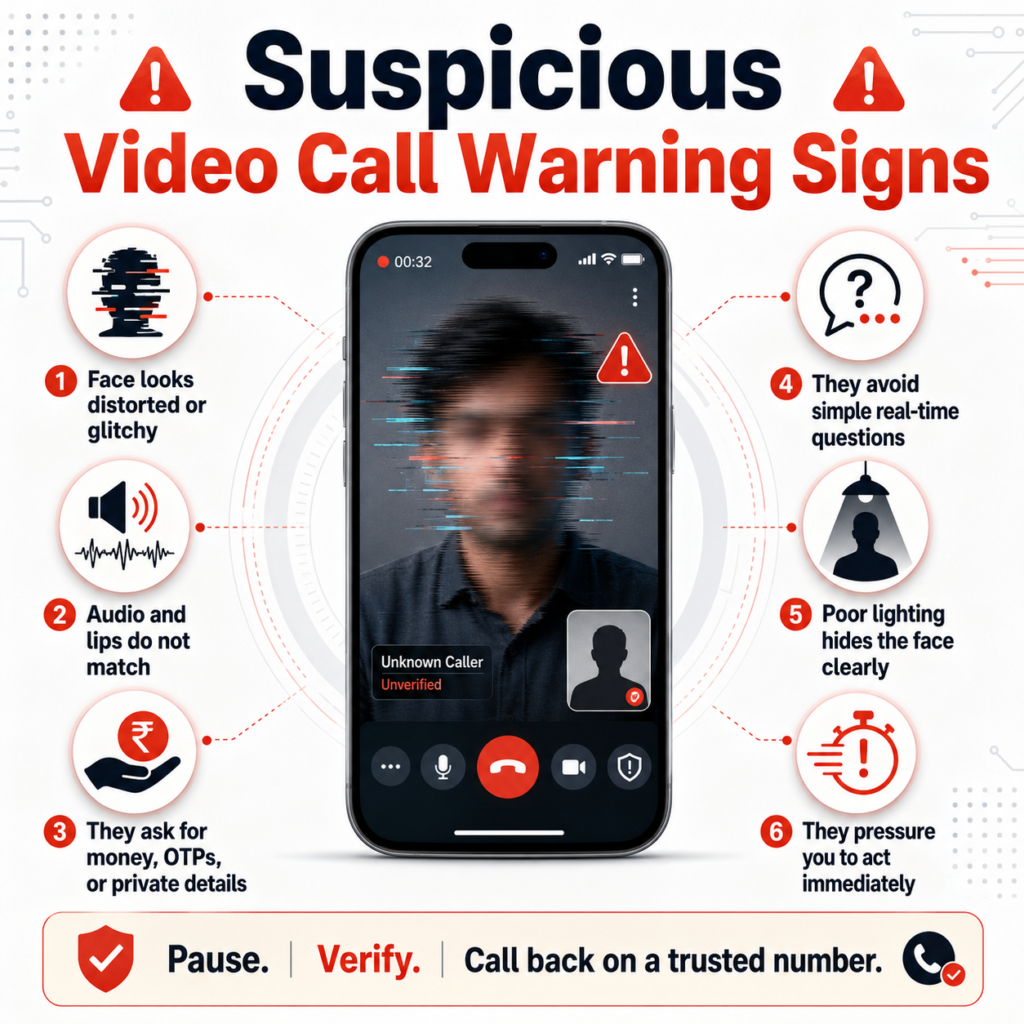
In business fraud, attackers may use fake video calls or manipulated recordings to impersonate senior executives. The FTC has noted that voice cloning can also be used to imitate company executives and trick employees into paying fake invoices or transferring money. (Consumer Advice)
This is why deepfake scams are not only a personal safety issue. They are also a cybersecurity and business risk.
Common Types of Deepfake Scams
1. Family Emergency Scam
This is one of the most emotionally powerful scams. A person receives a call that sounds like a child, parent, spouse, or relative. The caller claims there has been an accident, arrest, medical emergency, or urgent financial problem.
The scammer then asks for money through bank transfer, gift card, crypto, or UPI.
Warning sign: The caller creates panic and asks you not to contact anyone else.
2. Fake CEO or Boss Call
In this scam, an employee receives a call or voice note that sounds like the company owner, CEO, or manager.
The instruction may be:
- Transfer money urgently
- Change vendor bank details
- Share login credentials
- Approve a confidential payment
- Send sensitive client data
Business Email Compromise scams already rely on trusted-looking requests, and the FBI recommends verifying payment or purchase requests in person or through a known phone number before acting. (FBI)
With deepfake audio or video, this verification step becomes even more important.
3. Fake Investment Video Scam
Scammers create fake videos of famous personalities, business leaders, finance experts, or government figures promoting an investment opportunity.
The offer may promise:
- Guaranteed returns
- Quick profits
- AI trading income
- Crypto doubling schemes
- Exclusive private group access
Warning sign: The video pushes you to join a Telegram, WhatsApp, or private trading group.
4. Romance and Social Media Identity Scam
A scammer may use AI-generated images, fake voice notes, or short deepfake videos to build trust with someone online.
They may avoid live video calls or use pre-recorded clips. After building emotional trust, they ask for money, gifts, travel expenses, medical help, or investment support.
5. Fake Customer Support or Bank Call
A scammer may call pretending to be from your bank, payment app, courier company, or tech support team.
The deepfake element may not always be a known person’s voice. Sometimes scammers simply use AI to sound more polished, professional, and confident.
They may ask for:
- OTP
- Password
- Remote access
- Card details
- UPI PIN
- KYC update
- Account verification
No legitimate bank or payment company should ask for your OTP, PIN, or password on a call.
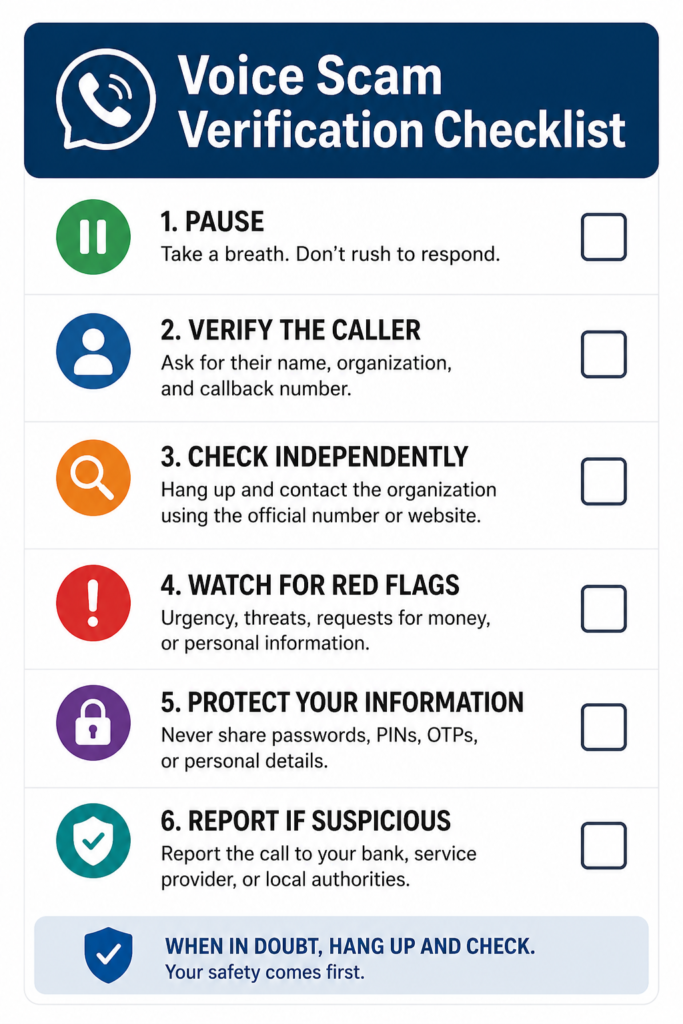
How to Identify a Fake Voice Call
Deepfake audio is becoming harder to detect by sound alone. So do not rely only on whether the voice “sounds real.”
Use this checklist instead.
1. Check the Urgency
Most scam calls create pressure.
They may say:
- “Do it now.”
- “Don’t tell anyone.”
- “I cannot talk for long.”
- “This is confidential.”
- “You will lose the opportunity.”
- “Your account will be blocked.”
Urgency is one of the biggest scam signals.
2. Hang Up and Call Back
Do not continue the call if money, personal information, or account access is involved.
Hang up and call the person back using a number you already know. Do not call back the same number that contacted you.
For example:
- If it sounds like your son, call his saved number.
- If it sounds like your boss, call through your office contact list.
- If it sounds like your bank, call the official customer care number from the bank website or app.
3. Ask a Personal Verification Question
Ask something only the real person would know.
Not generic questions like:
- “What is my name?”
- “Where do we live?”
- “What is your birthday?”
These may be available online.
Ask something more specific, such as:
- “What did we discuss yesterday?”
- “What was the name of the restaurant we visited last?”
- “What is our family safe word?”
- “Which client file did we review this morning?”
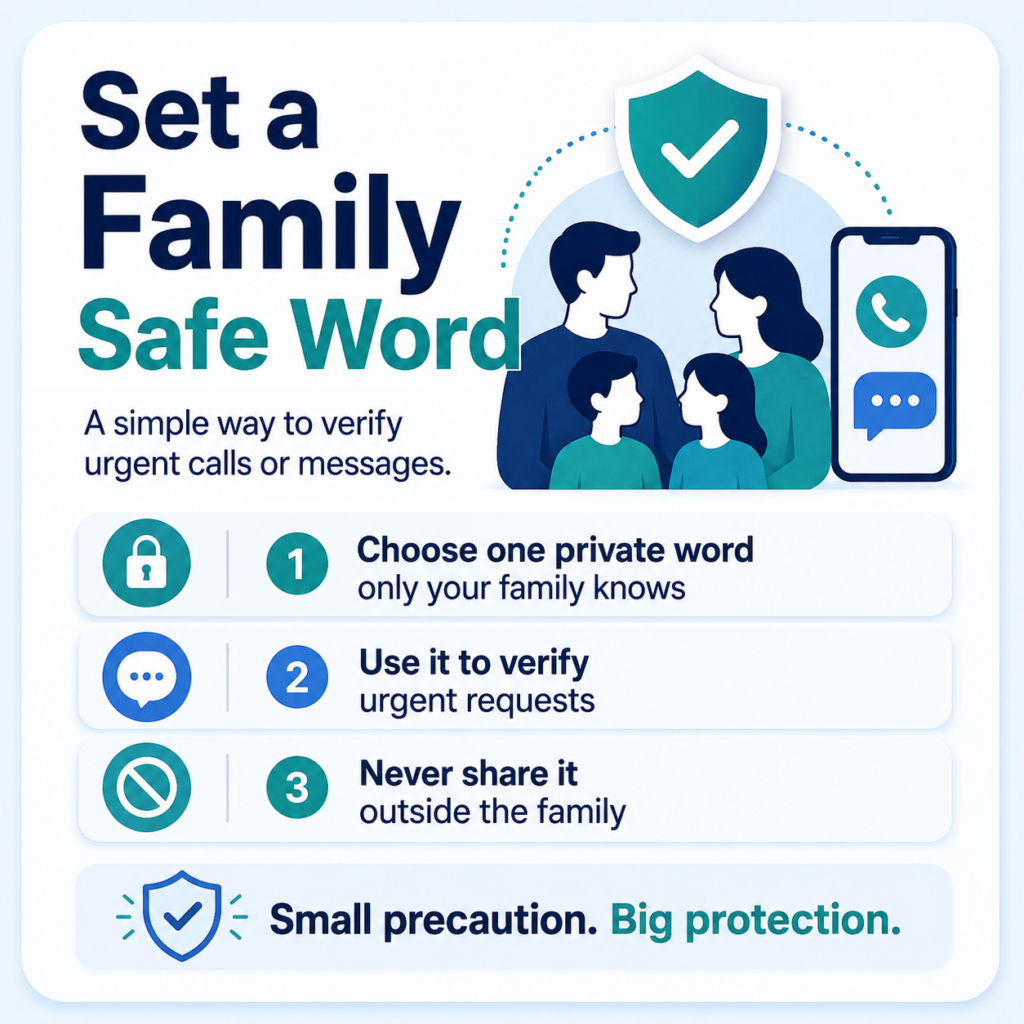
4. Create a Family Safe Word
A safe word is a simple private word known only to close family members.
If someone calls claiming there is an emergency, ask for the safe word before taking action.
This is especially useful for families with elderly parents, children studying outside, or relatives who travel frequently.
5. Listen for Audio Red Flags
AI voice scams may still have small flaws, such as:
- Strange pauses
- Flat emotional tone
- Repeated phrases
- Robotic pronunciation
- Background noise mismatch
- Voice not matching the situation
- Refusal to answer unexpected questions
The FBI notes that synthetic audio may sound unnatural or inconsistent, including issues with background noise or pitch. (FBI)
But remember: audio quality is not enough. Always verify through a second channel.
How to Identify a Fake Video Call or Deepfake Video
Deepfake videos can look convincing, especially on mobile screens. Still, there are warning signs.
1. Watch the Face Movement
Look for:
- Unnatural blinking
- Stiff facial expressions
- Delayed lip movement
- Mouth not matching words
- Strange eye movement
- Face shape changing slightly
- Skin texture looking too smooth
2. Check Lighting and Shadows
Deepfake videos often struggle with natural lighting.
Watch for:
- Shadows that do not match the room
- Face lighting different from the background
- Flickering around the mouth or eyes
- Blurry edges around the face
- Sudden changes when the person moves
The FBI says video deepfakes may show unnatural shadows, colors, and lighting patterns. (FBI)
3. Ask the Person to Do Something Unexpected
If you suspect a video call is fake, ask the person to perform a simple live action.
For example:
- Turn your head to the left
- Show today’s date on paper
- Move closer to the camera
- Cover one eye
- Say a random sentence
- Switch camera angle
A real person can respond naturally. A fake or pre-recorded video may fail.
4. Be Careful with “Poor Network” Excuses
Scammers may use excuses like:
- “My camera is lagging.”
- “Network is bad.”
- “I can’t talk long.”
- “Audio may not match because of connection.”
- “This is confidential; just listen.”
Sometimes poor video quality hides deepfake flaws.
5. Verify Through Another Channel
If a video call asks for money, approval, confidential information, or account access, pause immediately.
Verify through:
- A known phone number
- Official email thread
- Company communication tool
- In-person confirmation
- Direct family contact
- Bank or platform’s official support
Never approve financial action only because a video looked real.
What to Do If You Receive a Suspicious Deepfake Call
Follow this simple process:
Step 1: Pause
Do not respond emotionally. Scammers depend on panic.
Avoid sharing:
- OTP
- Password
- UPI PIN
- Card details
- Aadhaar/PAN details
- Bank information
- Company credentials
- Client data
Step 3: End the Call
Politely disconnect. You do not need to argue or prove anything.
Step 4: Verify Separately
Contact the person or organization through a trusted source.
Step 5: Report the Scam
Report the number, profile, ad, or message to the relevant platform. If money was transferred, contact your bank or payment provider immediately.
The FBI also recommends documenting details such as the scammer’s name, contact method, dates, payment method, destination of funds, and a description of interactions when reporting fraud. (FBI)
Deepfake Safety Tips for Families
Families should not wait until a scam happens. Set simple rules early.
Use these safety practices:
- Create a family safe word.
- Teach elderly family members about AI voice scams.
- Do not send money only based on a phone call.
- Always call back using saved numbers.
- Keep social media voice/video posts limited if possible.
- Avoid public sharing of children’s voice clips.
- Discuss emergency verification steps in advance.
A five-minute family discussion can prevent a serious financial scam.
Deepfake Safety Tips for Businesses
Businesses are also vulnerable, especially when payments, vendor changes, or approvals happen quickly.
Use these controls:
| Risk | Safety Control |
| Fake CEO payment request | Require two-person approval |
| Vendor bank change | Verify through official vendor contact |
| Voice note instruction | Confirm in writing through company email |
| Video call approval | Use meeting invite and internal verification |
| Urgent transfer request | Add cooling period for new beneficiaries |
| Employee data request | Verify with department head |
Every company should have a simple rule:
No payment or sensitive data transfer should happen only because of a voice call, video call, or WhatsApp message.
Are Deepfake Detection Tools Enough?
Deepfake detection tools can help, but they are not perfect.
AI-generated media is improving quickly, and detection tools may fail with compressed videos, low-quality calls, edited clips, or new generation methods.
That is why the best protection is not only technical detection. It is a combination of:
- Awareness
- Verification
- Safe words
- Internal approval process
- Payment controls
- Cybersecurity training
- Reporting culture
The NSA, FBI, and CISA have also released guidance describing deepfake threats to organizations and the need to understand synthetic media risks. (CISA)
Final Thoughts
Deepfake scams work because they attack human trust.
We trust familiar voices. We trust faces. We trust urgency when it comes from someone we know. Scammers know this, and AI gives them new tools to exploit that trust.
The best defense is not fear. It is verification.
Before sending money, sharing sensitive information, approving a payment, or trusting an urgent call, stop and ask:
Can I verify this through another trusted channel?
If the answer is no, do not proceed.
Deepfake technology will continue to improve, but simple habits like calling back, asking verification questions, using family safe words, and following business approval rules can protect you from most scams.
In the age of AI, trust should not disappear — but it should always be verified.
FAQs
1. What is a deepfake scam?
A deepfake scam is a fraud attempt where criminals use AI-generated voice, video, image, or identity content to impersonate a real person and trick victims into sending money, sharing data, or trusting false information.
Yes. Scammers may use short audio clips from social media videos, reels, podcasts, or public recordings to create a fake voice that sounds similar to yours. The FTC has warned that voice clips posted online can be misused for voice cloning scams. (Consumer Advice)
3. How do I know if a video call is a deepfake?
Look for unnatural blinking, lip-sync issues, strange lighting, blurry face edges, delayed expressions, and refusal to perform live actions. But visual signs are not always reliable, so always verify through another trusted channel.
4. What should I do if I get a suspicious call from a family member asking for money?
Hang up and call the person back using their saved number. Ask a private verification question or use a family safe word. Do not transfer money based only on an emotional emergency call.
5. Can deepfake scams happen on WhatsApp?
Yes. Scammers can use WhatsApp voice notes, video calls, fake profile photos, and copied identities to impersonate someone. Always verify unusual requests, especially those involving money, OTPs, or personal information.
6. Are AI deepfake detection apps reliable?
They can help, but they are not fully reliable. Deepfake quality keeps improving, and detection tools may miss manipulated content. Human verification and safe communication practices are still necessary.
7. How can businesses protect themselves from deepfake scams?
Businesses should use two-person payment approvals, vendor verification, call-back procedures, internal communication checks, employee training, and strict rules against approving payments through voice or video messages alone.
For Indian users: If you lose money or receive a cyber fraud attempt, report it through India’s National Cyber Crime Reporting Portal or call the cyber fraud helpline 1930. (Cyber Crime)
Editor’s Note:
At TechnoParadox, we recommend treating every urgent digital request with caution. Whether it comes through voice, video, WhatsApp, email, or social media, any request involving money, OTP, login access, or personal data should always be verified through a second trusted channel.